
Shockwave Therapy: What is it and who can it help?
Shockwave therapy is a non-invasive treatment available at our physiotherapy clinic in Prince George. It is an evidence-based treatment which makes use of acoustic waves to promote tissue healing and regulate pain. Shockwave is used to help manage a wide range of musculoskeletal conditions, especially those involving tendon pain or chronic soft-tissue irritation.
Shockwave technology has been used in healthcare since the 1980’s, used to treat kidney stones in its earliest days. The form used in physiotherapy today is called Radial Extracorporeal Shock-Wave Therapy (rEWST), but often just called Shockwave Therapy.
Unlike many treatment methods used in clinics today, shockwave therapy does not send electrical currents into your body. Instead, it uses compressed air to generate pressure waves that spread through the tissues.
At Northern Motive Physiotherapy, shockwave therapy is often used alongside exercise based treatment plans. With this comprehensive approach, our skilled clinicians use shockwave to help manage persistent pain and to support tissue recovery. Visit our website to learn more about our complete range of physiotherapy services.
How does Shockwave Therapy work?
Shockwave therapy uses acoustic pressure waves to deliver energy to injured tissues without breaking the skin. When applied in therapeutic dosages by trained professionals, shockwave stimulates your body’s natural healing mechanisms. The mechanical energy applied to the body can trigger biological repair processes and promote cell activity in the targeted region.
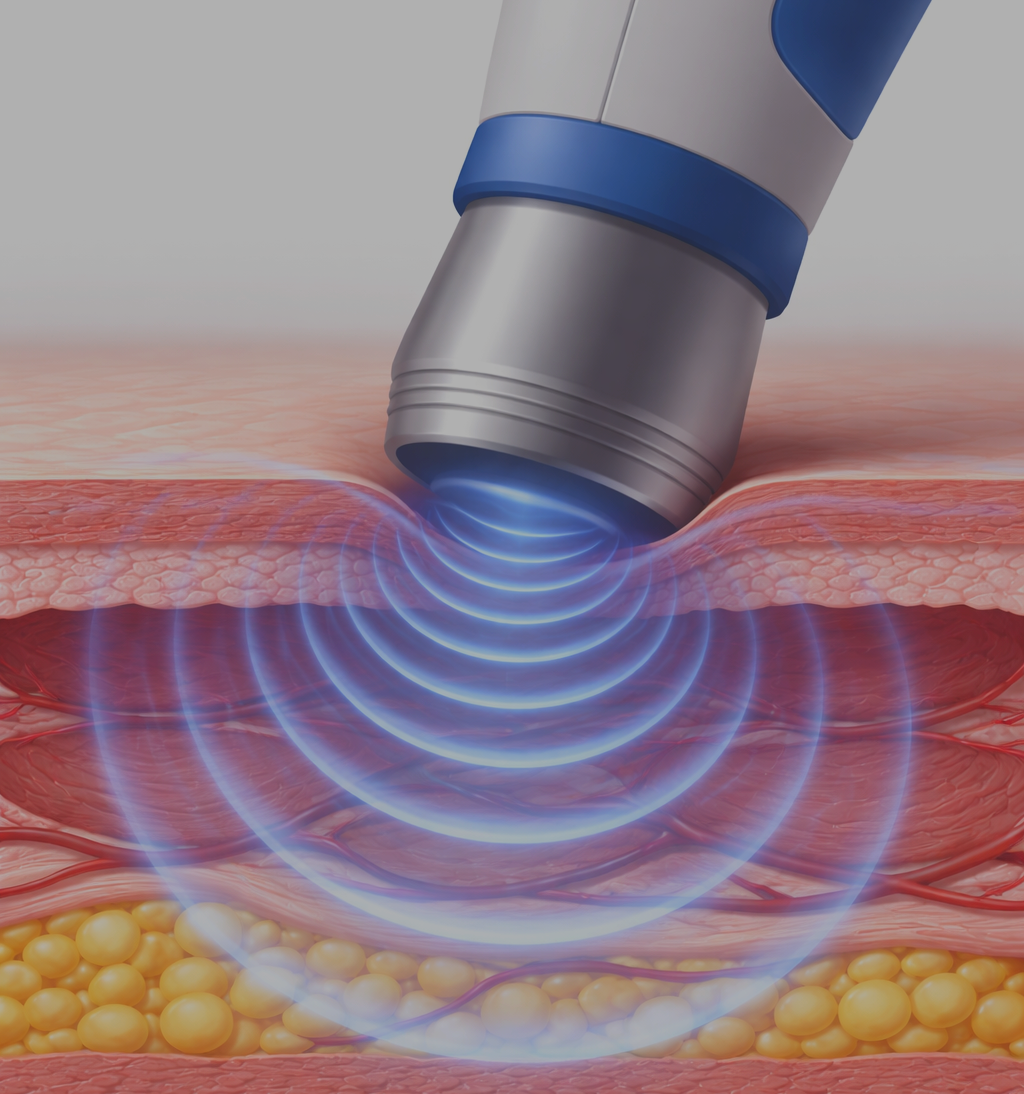
Research supports the effectiveness of shockwave therapy for a number of conditions, although the exact mechanisms explaining the “why” behind its effects are still being investigated. In some conditions, such as those involving calcified tissue, the mechanical energy delivered by shock waves may help to break up the calcium deposits. Shockwave therapy is also associated with the increase of blood vessel formation around the application site.
In addition to promoting healing, shockwave can also be used in pain modulation. The acoustic waves interfere with local nerve paths, which can change how you perceive pain in the treatment area.
What conditions can be treated/ managed with shockwave therapy?
Evidence supports the use of shockwave therapy in the management of several musculoskeletal conditions commonly seen in physiotherapy practice. Some of the most well-supported conditions include:
Plantar fasciitis
Calcific tendonitis, particularly in the shoulder/ rotator cuff.
Tennis elbow (lateral epicondylalgia)
Achilles tendonopathy
Patellar Tendonopathy
Research also suggests that shockwave therapy can be helpful in managing the symptoms that are associated with osteoarthritis of the knee.
Many of these conditions share common characteristics. They often involve chronic irritation or degeneration of tendon or soft tissue, rather than a new/acute injury. These types of conditions can sometimes persist despite rest, stretching, or exercise programs. In these cases, shockwave therapy may be used as part of a broader physiotherapy treatment plan with the goal of addressing pain, improving tissue health, and restoring functional ability.
What should I expect to feel during and after shockwave therapy?
Shockwave treatment sessions are typically brief (only a few minutes) and performed during a standard physiotherapy appointment. During treatment, a small amount of gel is applied to the skin over the targeted area. The shockwave device is then placed against the skin and delivers a series of rapid acoustic pulses into the tissue. Patients usually describe the sensation as a rapid pulsing feeling, or like “someone is flicking you with their finger, but underneath the skin”. Because the treatment is directed toward sensitive or irritated tissue, some moderate discomfort is to be expected during the procedure.
Your physiotherapist can adjust the intensity of the treatment to keep it within a tolerable but effective range.
How many treatment sessions are needed?
Shockwave therapy is delivered over a short series of treatments. Most treatment plans involve 3 to 6 sessions, usually spaced approximately one week apart. This schedule allows the tissue time to respond to the treatment in between sessions. Some clients begin to notice improvements after a couple of sessions, though the timeline can vary depending on the condition being treated and how long symptoms have been present.
Your physiotherapist will monitor your progress and determine whether additional sessions are appropriate based on how your body is responding.
Are there any risks or side effects that I should be aware of?
Radial extracorporeal shockwave therapy is considered a safe, non-invasive treatment option when delivered by trained healthcare professionals. It is common to experience mild soreness, temporary redness, or swelling in the area for a short period of time. This usually resolves quickly and does not require downtime from normal activity.
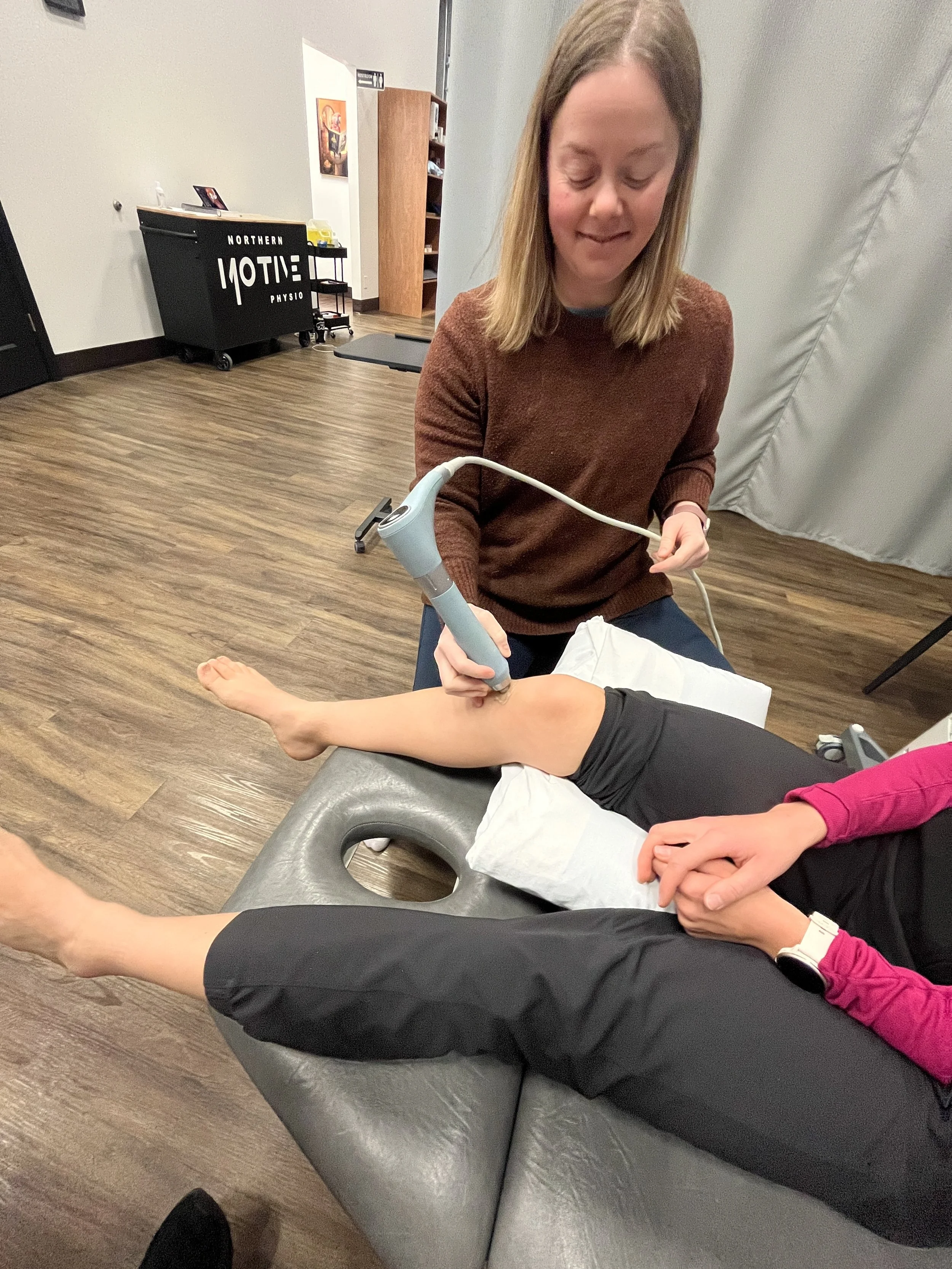
Because shockwave therapy does not break the skin and does not involve injections, clients are typically able to return to their usual activities following the appointment while continuing with their physiotherapy rehabilitation program.
Shockwave therapy is not appropriate for pregnant women.
Should I book an appointment?
If you are experiencing persistent tendon pain or chronic soft-tissue irritation that has not improved with rest or activity modification, shockwave therapy may be worth discussing with your physiotherapist.
At Northern Motive Physiotherapy, your appointment will begin with a comprehensive assessment to determine the cause of your symptoms. Physiotherapy treatment plans are individualized and may include exercise therapy, manual therapy, and other evidence-based approaches including shockwave therapy.
If shockwave therapy is recommended, your physiotherapist will explain what to expect, how many sessions may be required, and how it fits within your overall rehabilitation plan.
To learn more about treatment options or to schedule an assessment, you can book directly through the clinic website.
To book an appointment at Northern Motive Physio, call us at (250) 645-7169.
Early assessment and targeted physiotherapy care can help address musculoskeletal pain before it becomes a longer-term issue.